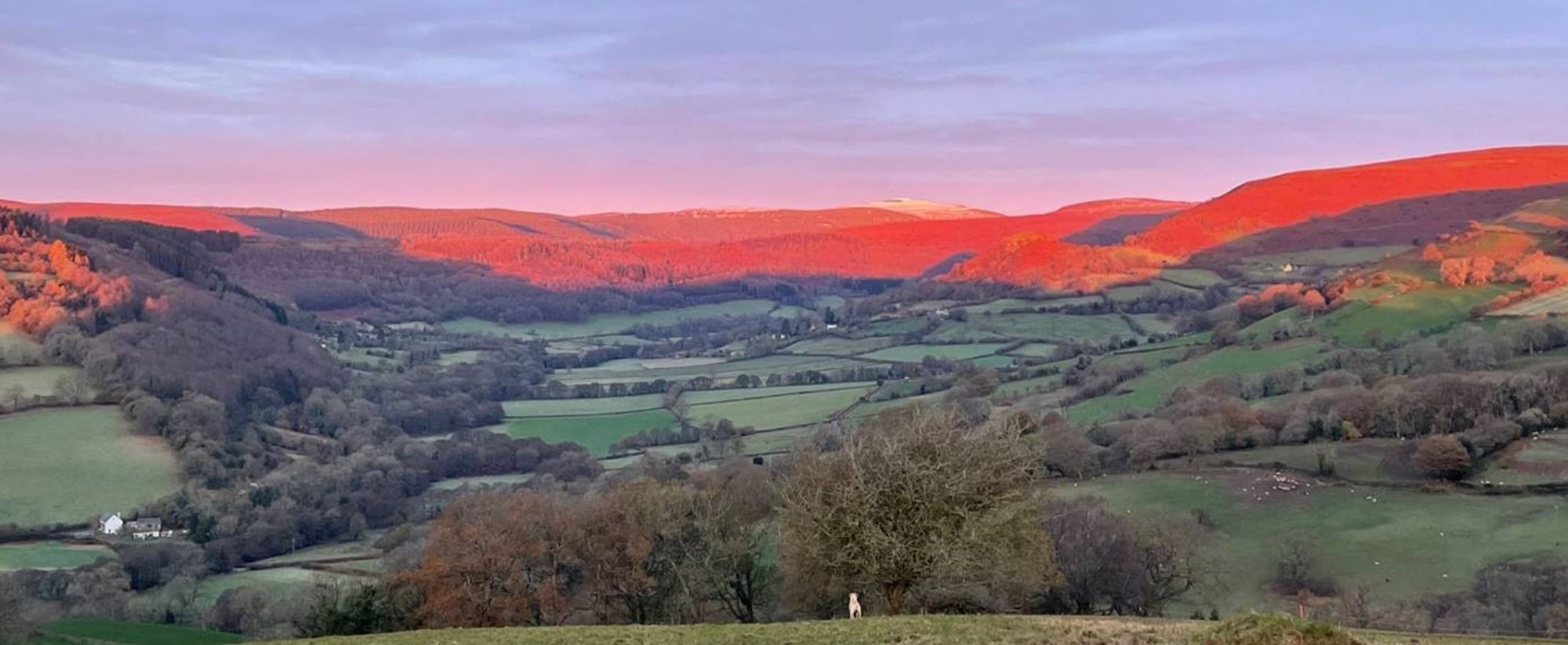
An invite to the far east meant an opportunity to head north to garner ‘field intel’ on what’s going on ‘out there’. Mainly in pictures, as the word content would take up too much space.
[as ever, there’s more than reported]

9am pitstop
An old contact from Scotland, previously a rural surveyor at SNH (now NatureScot), had moved to the Marches and so a cuppa just off the A49 provided time to catch up. Fragmented landscapes, green lairds of differing hues, husbandry of land, deer control orders and woodland expansion across devolved nations – all fuelled my brain for the next M6 stretch.
Eagle-eyed blur

Some birds of prey, moving around in a winter snapshot, are doing quietly OK. Especially in relation to 100 years ago. Though, there may be a natural dip in 2026 due to cyclic vole numbers.
I’ll leave that one, unharried for now, out there for now.
River trust
A pack of biscuits is currency for a brief chat on water covering nutrient neutrality, farmer groups, catchment management and even a hint of Cunliffe in an industrial estate on the outskirts of Penrith.

Carrying capacity [land]
Making space for change requires people. There are some who are trusted by both eNGOs and farmers to deliver publicly funded works on the ground. Scroll down for example….

Below is a multifunctional landscape in the Lake District. Along with an adaptively managed grazing regime, there is a diversity of land use including: oak woodland, overwintered cattle, pasture tree guards, water absorbing bog, new hedges, woodcock-friendly conifer plantation – none of which is that available for cherry picking as a standalone ‘silver bullet’ land use.

Tarras grouse
I have a penchant for returning to places which are undergoing change. Such as a site in south-west Scotland once called Langholm Moor and now Tarras Valley Nature Reserve. This 2.5min video update from site provides one take on some of the challenges around land designated for nature while embracing community management.
(ps sidebar – feral goat curry could be in the offing)

Deep forest

When most of England’s timber products come from a single forest in the north of England – Kielder – I wonder if there is any space down south for few smaller ‘productive’ forests. Especially as it is where most of the timber is required for fitting out houses (not just roof trusses but glued/cross-laminated engineered timber). Anyway, here’s a 90sec vlog looking towards on Keilderhead National Nature Reserve.
College learning
Passing through north east England, I dropped in briefly at a forgotten corner of Northumberland. Last visited 15 years ago, a drive up the valley provided a flavour of the changes on which the landowner wrote about it in 2014 for a rural surveyor magazine.
Gorse-sided river banks slowing floodwater, birch and pine bracken slopes with sheep flocks moved around the landscape. All of which optimise agricultural output while conserving ecological objectives to provide a richer diversity of habitat and climate-resilient landscapes. Even if the welcomed public access might at times increase risk of wildfire.
Here’s a 30sec update from the valley.

A small farm
For decades I’ve visited a small farm just west of Newcastle to walk the boundaries hunting for the pot. The farmer tells me what they’re up to, what they’ve seen over the year and here’s a 80sec report on what nested in the field on the left below…..

…and another 80sec report on creative silvo-pasture works on the nearby field below.

Harrogate cuppa
Over another cuppa (and a parking ticket), a ‘senior’ land agency firm is advocating ‘blending finance’ for the utilisation of land by a range of fresh ‘operators’ on the rural scene. Have a guess as to which two operators I refer to this oblique 90sec vlog post on LinkedIn.
Those advocating ‘charismatic carbon‘ also means a change in use of language alongside some re-purposing of land use while also finding ways to keep farm tenants on the land. This will involve more creative collaborative landlord/tenant ‘farming’ agreements around stewarding and husbanding land for all its outputs.

Leicestershire’s land drains

Research demonstration farms rarely make money. Ouch! That’s because they are busy experimenting with farming practices*, monitoring results, processing data, passing on knowledge to others while not always having time to keep their eye on their bottom line.
*n.b. it is crucial to co-design research with farmers. Such as when modern land drainage practices could improve both soil biology and food output from suitable farmland. An 85sec observation here on the ‘mole’ below and on knowledge exchange, this ‘Mind the Gap‘ insight from a late farming professor is worth a read.

Mole’s drain and Ratty’s marsh
Populist food production
This is not an easy observation, even if framed under the remit of ‘critical thinking’. Some farmland is due to change the nature of its outputs over the next few years. As some baulk at land being designated only for nature, they might also hesitate to designate land purely for food production – even within a farm profitability review.
Especially when the countryside is in a continual state of flux. Look upstream in 2026 and beyond, for more water-related stuff such as this resilient catchment collaborative project.

Eastern promise
Ending up in this Ramsar site on the Norfolk coastline after dark was a treat. Even if it provoked me to think long and hard about how we might explore more adaptive creative ways to ‘do’ conservation in the UK.
In an era of simple soundbites, this blog may, at times, come across as obtuse in parts. However, as we now require more nuanced complexity within both habitat and diets, I’ll just wish you all the best for 2026!

Breaking bread

Addendum – upcoming ’26
Some gigs for which I’m engaged in 2026 include a farmers conf in Scotland, an DEI workshop for the UK forestry sector, and a ‘wilding’ event in London. And if up for a provocation, book a free viewing of the ‘Future of Food’ exhibition at the Science Museum (I’m visiting the exhibition again on the 11th Feb and having attended the jamboree of Oxford farming conferences, it’s time to ‘lean in‘ to the year ahead)

ps. you can ask me for an explanation or to unpack any of the content – drop me a line – as this blog may be updated at any time. (latest revision 12/1/25)